

A bracelet can look simple in a product photo, but producing one consistently involves far more than forming metal and attaching a clasp. The way a bracelet moves, how its components connect, how the clasp functions, how the surface is finished, and how accurately every piece is assembled all affect the final product.
For jewelry brands, choosing the right bracelet manufacturer means looking beyond price and production capacity. The manufacturer needs to understand the construction of the bracelet itself and have the equipment, craftsmanship, and quality controls to reproduce that construction consistently at scale.
Here are the key areas to evaluate before choosing a bracelet manufacturing partner.
Start With the Manufacturer’s Bracelet-Specific Capabilities
A manufacturer may produce rings, earrings, necklaces, and bracelets, but that does not necessarily mean it has the same level of expertise across every product category.
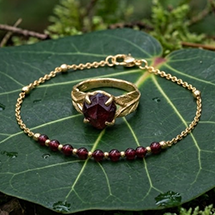
Bracelets have their own production requirements. They need to flex naturally around the wrist, maintain reliable connections between components, and provide a secure yet practical closure. Designs with multiple links, charms, beads, or moving components introduce even more assembly points that need to be controlled.
A capable bracelet manufacturer should be able to explain how it approaches these details rather than simply showing you a catalog of finished products.
1. Material and Finishing Capabilities
Start by understanding which materials the manufacturer regularly works with and how those materials are processed.
For example, sterling silver bracelets require proper control of alloy composition, casting, polishing, and surface finishing. Brass can offer a cost-effective option for fashion jewelry, while solid gold requires tighter control of material usage, weight, and production cost.
Finishing is equally important. Gold plating, rose gold, white rhodium, and other finishes need consistent preparation before plating. Poor polishing underneath the plating can remain visible after finishing, while inconsistent surface preparation can lead to differences in color and appearance between production batches.
If your collection is primarily silver, working with an experienced silver jewelry manufacturer can also give you access to broader silver production capabilities beyond a single bracelet style.
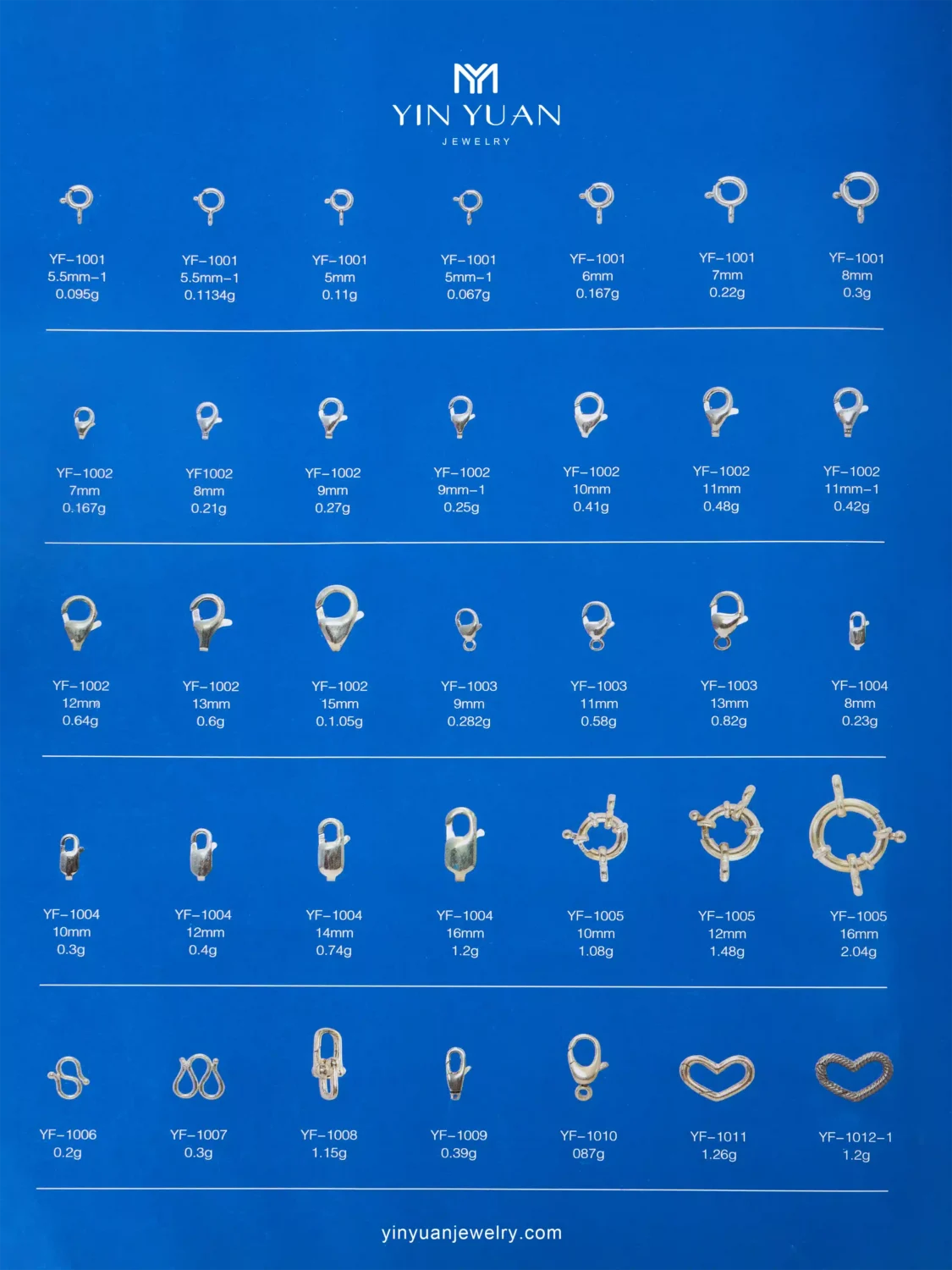
2. Pay Close Attention to Clasps and Bracelet Components
The clasp is one of the easiest details to overlook when comparing manufacturers, yet it has a direct impact on both usability and the perceived quality of a bracelet.
A lobster clasp, toggle, box clasp, magnetic closure, or custom-designed fastening system creates a different wearing experience. The appropriate choice depends on the bracelet’s weight, construction, target customer, and overall design.
The connection between the clasp and the bracelet matters just as much. Jump rings, end caps, connectors, chains, and other small components need to be properly sized and securely assembled. A visually attractive bracelet can still feel poorly made if these parts are too loose, too stiff, or disproportionate to the main design.
This is particularly important when developing custom bracelets. A manufacturer with a dedicated range of bracelet components and clasp options can often make the development process more efficient because the design team can select and modify proven components rather than developing every small part from scratch.
For brands developing their own designs, it is worth looking specifically at a manufacturer’s custom bracelet manufacturing capabilities and asking to see examples of different clasp and connection solutions.
Look at How the Manufacturer Develops Custom Bracelets
Custom development should begin long before a sample reaches your hands.
A professional manufacturer should be able to take a concept, drawing, reference piece, or 3D file and translate it into a design that can actually be produced.
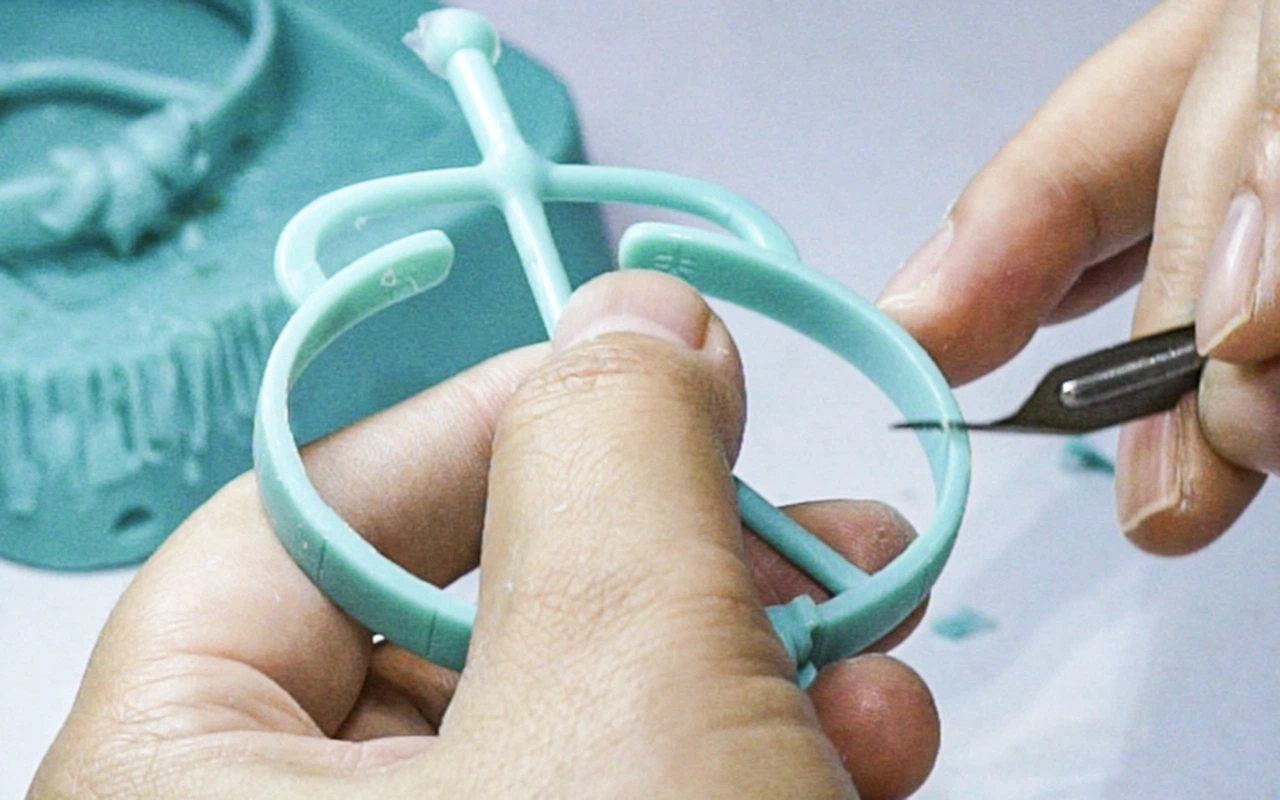
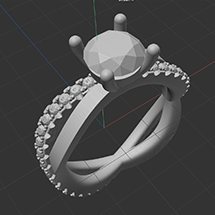
1. CAD Should Solve Production Problems Before Sampling
CAD is not simply a way to create a visually accurate 3D model.
For bracelets, the CAD stage needs to account for wall thickness, link dimensions, stone-setting areas, clasp connections, articulation, and the way individual components interact when the bracelet is worn.
For example, two links may look perfectly aligned in a static 3D rendering but create excessive stiffness when connected together. A clasp may look proportionate but not provide enough clearance for comfortable operation. A charm may have enough detail visually but require adjustments to maintain structural strength during casting.
These issues are much easier and less expensive to address during development than after molds and production tooling have already been created.
If your project involves a broader range of custom jewelry products, you can also review the company’s custom jewelry manufacturing service to understand how design development, prototyping, and production are handled as part of the overall process.
2. The Sample Should Be Evaluated as a Wearable Product
A bracelet sample should not be judged only by how closely it matches the approved drawing.
It should be worn and handled.
Check whether the bracelet bends naturally around the wrist. Open and close the clasp repeatedly. Examine the connections between links and components. Look for sharp edges, excessive movement, weak soldered areas, uneven polishing, or components that rub against each other.
This is where an experienced manufacturer can make a significant difference. A good sample is not simply a physical copy of the CAD file; it is an opportunity to identify construction problems before they become production problems.
Examine What Happens Between the Approved Sample and Bulk Production
Approving a sample does not guarantee that every piece in a production order will look and function exactly the same.
The manufacturer needs a system for translating the approved sample into repeatable bulk production.
This includes controlling casting dimensions, component tolerances, polishing standards, plating thickness and color, stone placement, assembly methods, and final inspection.
Bracelets can be particularly sensitive to small variations because they contain multiple connected components. A minor dimensional difference in one part can affect the way the entire bracelet sits or moves.
Ask how the manufacturer keeps the approved sample as the production reference. Ideally, the factory should have clear specifications, production samples, inspection standards, and procedures that allow different production batches to be compared against the approved version.
Pay Attention to Quality Control at the Details That Matter
Quality control should cover more than checking whether the bracelet looks attractive under normal lighting.
1. Material Verification
For precious-metal products, ask how the material is verified and documented.
The manufacturer should have a clear process for confirming the specified material and maintaining consistency between the approved specification and bulk production.
For sterling silver products, this includes verifying the correct alloy and ensuring that the material used in production matches the agreed specification.
2. Plating and Surface Finish
Plating quality depends heavily on what happens before the bracelet enters the plating process.
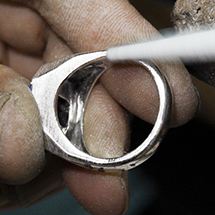
Polishing needs to remove casting marks and surface imperfections without changing important dimensions or details. The surface then needs to be properly prepared so that the plating adheres evenly.
For bracelets with multiple components, consistency becomes even more important. The clasp, chain, charms, and other components should have a consistent visual finish rather than appearing slightly different in tone or texture.
If your products are specifically focused on 925 sterling silver, you can also compare the manufacturer’s capabilities with the considerations covered in our guide to choosing a 925 silver bracelet manufacturer.
3. Assembly and Function
Functional inspection is essential for bracelets.
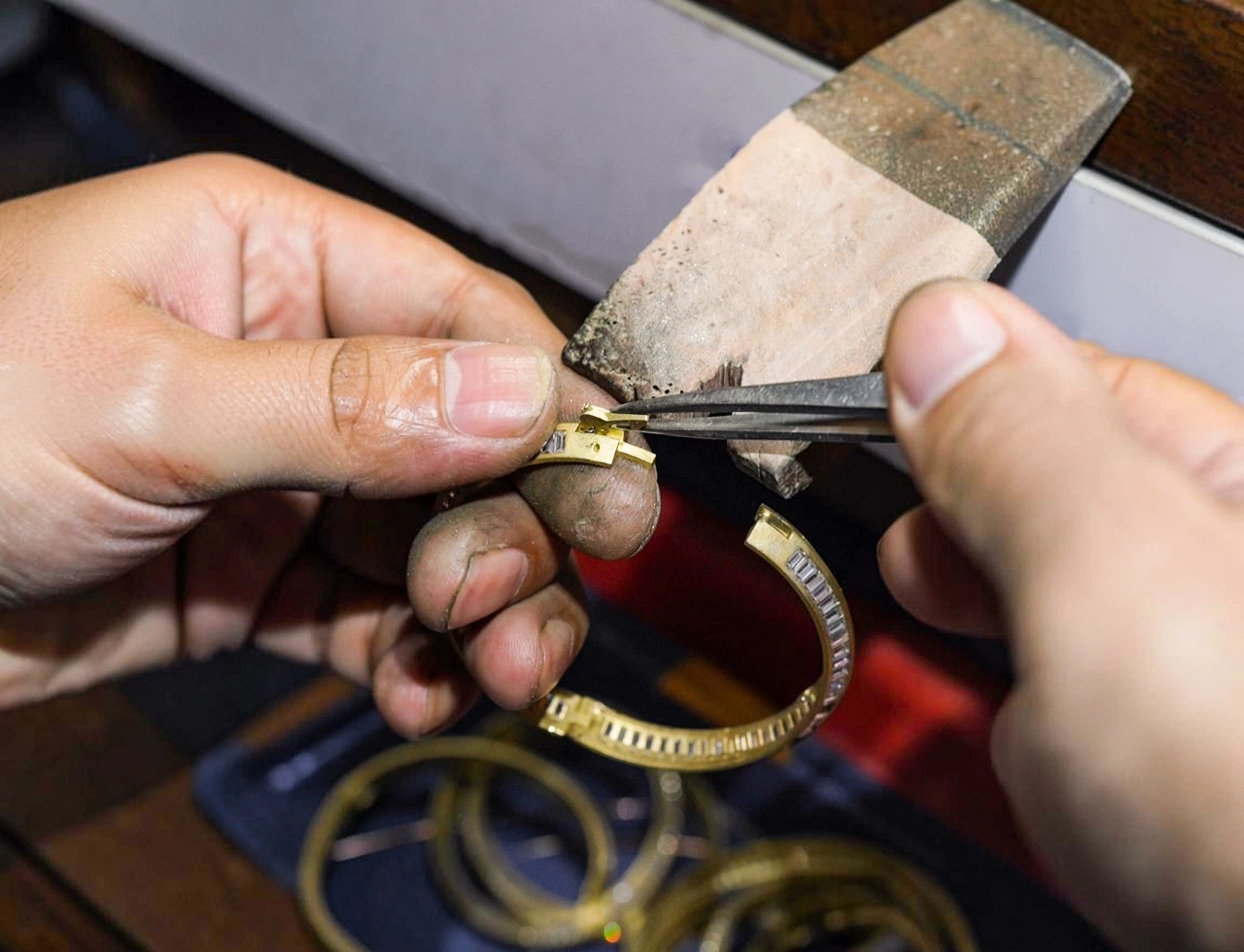
The clasp should open and close properly. Links should move as intended without excessive looseness. Soldered or connected areas should withstand normal handling. Stone settings should be secure, and decorative components should not interfere with movement.
For production orders, these checks need to happen consistently rather than only on the first few samples.
A manufacturer that understands bracelet construction will treat functionality as part of quality control, not as something the customer discovers after receiving the shipment.
Make Sure the Manufacturer Can Handle Your Order at Different Stages
Your supplier should be able to support the project beyond the first sample.
A startup brand may begin with a relatively small production run, while an established jewelry company may eventually need significantly higher quantities. The manufacturer’s processes should be able to accommodate that growth without causing major changes in quality or production standards.
Ask about:
- Minimum order quantities for different materials
- Sample and prototype lead times
- Bulk production lead times
- Production capacity
- Component availability
- Quality control procedures
- Packaging and labeling requirements
- Ability to handle repeat orders
MOQ is especially important for brands developing multiple bracelet designs. A manufacturer that offers reasonable minimums can make it easier to test new designs without committing to excessive inventory.
Consider the Requirements of Different Bracelet Constructions
Not every bracelet should be manufactured in the same way.
A charm bracelet may require reliable connections between multiple decorative elements. A beaded bracelet depends heavily on bead quality, stringing or wire construction, and component durability. Link bracelets require precise dimensions and smooth articulation. Personalized bracelets may involve engraving, name plates, initials, or other customized elements that need to remain clear and consistent across production.
This is why looking at a manufacturer’s existing bracelet collection can be useful. It gives you a better idea of the construction styles and component combinations the factory is already familiar with.
The more complex the bracelet design, the more important this experience becomes.
Communication and Production Management Matter Too
Manufacturing quality depends partly on how clearly technical information is communicated.
When discussing a new bracelet, your manufacturer should be able to identify potential production issues and explain what needs to be adjusted. If a component is too thin, a connection is too weak, or a design detail is likely to cause problems during casting or polishing, the factory should raise the issue before production begins.
This type of communication is particularly valuable for overseas B2B buyers because many production decisions need to be made remotely.
You should also be able to receive clear information about sampling, revisions, approvals, production schedules, and quality inspections. A manufacturer that communicates well makes the entire development process easier to manage.
Questions Worth Asking a Bracelet Manufacturer
Before placing an order, ask questions that reveal how the manufacturer actually manages bracelet production.
- What bracelet constructions do you specialize in?
- What clasp and bracelet components can you provide?
- Can you develop custom clasps or modify existing components?
- Can you work from sketches, reference samples, or 3D files?
- How do you test the fit and function of a new bracelet sample?
- How do you control consistency between samples and bulk production?
- What plating options and thicknesses do you offer?
- What are your MOQs for different materials?
- How do you inspect clasps, links, connections, and stone settings?
- Can you support repeat production as order quantities increase?
- How do you handle design confidentiality and intellectual property?
The quality of the answers can tell you more than a product catalog alone.
What a Capable Bracelet Manufacturer Should Bring to Your Brand
The right bracelet manufacturer should contribute more than production capacity.
It should understand how bracelet construction affects wearability, how components work together, how finishing affects the final appearance, and how small production variables can influence consistency across a large order.
For brands developing custom collections, this expertise becomes even more valuable. The manufacturer should be able to turn a concept into a practical design, identify potential production problems early, create an accurate sample, and reproduce the approved product consistently in bulk.
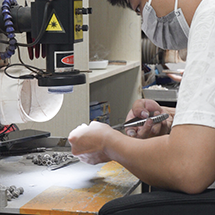
Yinyuan Jewelry supports custom bracelet development with in-house design and manufacturing capabilities, including CAD development, mold making, casting, polishing, plating, component assembly, and quality control.
If you are looking for a manufacturing partner for a new bracelet collection or custom bracelet project, the most important question is not simply whether a factory can make bracelets. It is whether the factory understands the details that make a bracelet work—and can reproduce those details consistently at production scale.
Frequently Asked Questions About Yinyuan Jewelry
What types of bracelets can Yinyuan Jewelry manufacture?
Yinyuan Jewelry manufactures a wide range of bracelets, including link bracelets, chain bracelets, charm bracelets, beaded bracelets, bangles, cuffs, and personalized designs. We also support custom bracelet development based on your own designs, sketches, reference samples, or ideas.
Can Yinyuan Jewelry make custom bracelets from my design?
Yes. Yinyuan supports custom bracelet development from initial design through sampling and bulk production. Our team can assist with CAD development, 3D modeling, mold making, casting, polishing, plating, assembly, and final quality control.
What materials can Yinyuan Jewelry use for bracelets?
We manufacture bracelets in 925 sterling silver, brass, and solid gold, with finishing options including gold plating, rose gold, white rhodium, and other plating finishes. We can also work with gemstones, beads, pearls, lab-grown diamonds, and other decorative materials depending on the design.
What is the MOQ for custom bracelets at Yinyuan Jewelry?
Our MOQ depends on the material and bracelet design. For 925 sterling silver bracelets, our standard MOQ starts at 30 pieces per design, while brass bracelets generally start at 50 pieces. For solid gold, production can start from 1 piece, making it suitable for samples, prototypes, or highly customized designs.
Can Yinyuan Jewelry provide custom clasps and bracelet components?
Yes. Yinyuan has an in-house range of bracelet clasps and components that can be used for custom bracelet development. Our team can help select, modify, or combine suitable components based on the bracelet’s construction, appearance, and functional requirements. For more complex designs, we can also develop components specifically for the project.
