

Finding jewelry manufacturers in China is easy. Finding the right manufacturing partner for your designs, quality standards, budget, and launch schedule is much more difficult.
A Google search can return thousands of factories, suppliers, trading companies, wholesalers, and marketplace listings. Many appear to offer similar products and services, but their actual production capabilities may differ significantly. Some operate their own jewelry factory, while others coordinate orders through third-party workshops. Some focus on original custom development, while others mainly supply ready-made wholesale jewelry.
These differences matter to jewelry brands, wholesalers, independent designers, and new business owners. The wrong supplier can lead to unclear quotations, repeated sample revisions, inconsistent plating, delayed production, or finished products that do not match the approved sample.
This guide explains how to find reliable jewelry manufacturers in China, compare different sourcing options, verify factory capabilities, and prepare for sampling and bulk production.
If you are still exploring product directions, review YinYuan’s custom jewelry products to compare materials, styles, and manufacturing possibilities for your next collection.
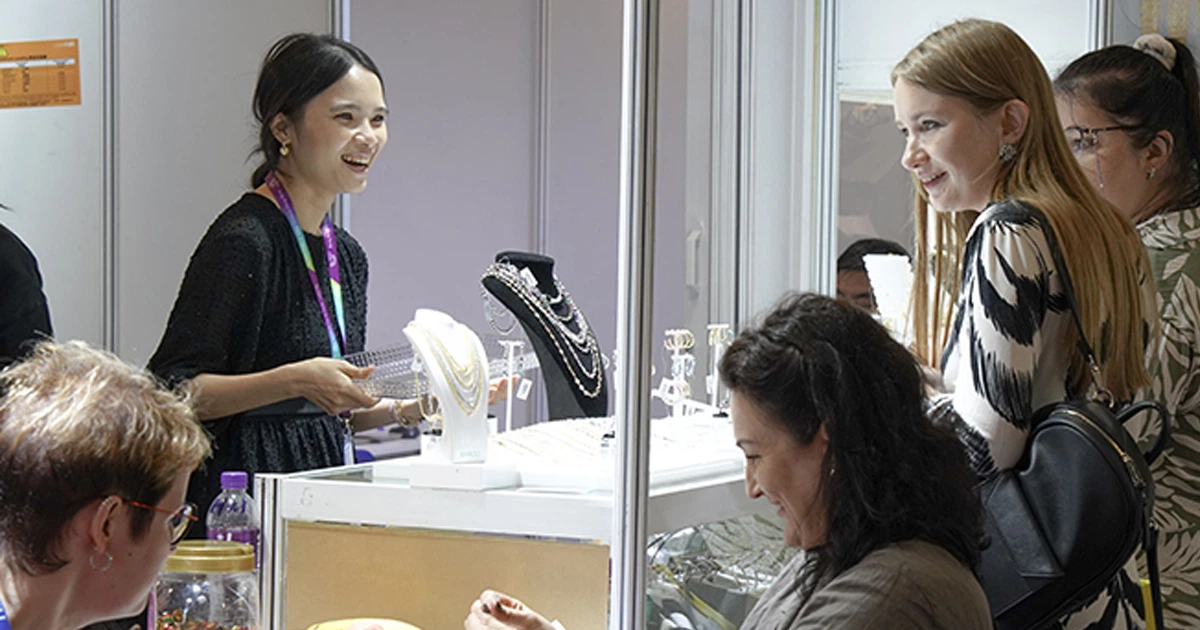
Jewelry Manufacturers in China Buyers Can Research
The companies below are examples for initial supplier research rather than a ranking. Their current services, materials, MOQs, certifications, factory status, and commercial terms should be independently verified before placing an order.
Xuping Jewelry
Xuping Jewelry publicly presents itself as a manufacturer and supplier of fashion and simulation jewelry. Its product range includes necklaces, bracelets, rings, earrings, pendants, and other accessories. The business also combines manufacturing with wholesale and ready-made product supply.
It may be worth researching for buyers looking for high-volume fashion jewelry, broad catalogs, or gold-colored imitation jewelry. Brands requiring highly exclusive development should confirm customization depth, design ownership, MOQ, and whether specific products come from existing collections or original OEM projects.
TTT Jewelry
TTT Jewelry publicly offers OEM and ODM custom jewelry manufacturing and presents a development process involving design, 3D visualization, sampling, production, finishing, and quality inspection.
The company may be relevant to brands that already have design concepts and need support converting them into production-ready pieces. Buyers should confirm its current material capabilities, sample timeline, MOQ, plating specifications, and which manufacturing processes take place within its own facility.
HonHo Jewelry
HonHo Jewelry publicly describes its business as covering stainless steel, brass, and 925 sterling silver jewelry. It also presents OEM/ODM, wholesale, PVD plating, electroplating, CAD development, and quality-control services.
It may suit buyers comparing mixed-material fashion jewelry suppliers or developing plated everyday collections. As with any supplier, buyers should verify material specifications, testing claims, plating thickness, sample approval procedures, and current production lead times.
Provence Jewellery
Provence Jewellery publicly positions itself around fine jewelry made with lab-grown diamonds, moissanite, colored gemstones, and precious-metal settings. It may be more relevant to buyers developing engagement rings, bridal jewelry, gemstone collections, or made-to-order fine jewelry.
Brands should confirm gemstone grading, certification, metal purity, pricing validity, stone replacement policies, sample procedures, and whether services are structured for one-off custom pieces, wholesale orders, or both.
Cherry Jewelry
Cherry Jewelry publicly specializes in stainless steel jewelry and presents OEM/ODM services such as cutting, polishing, plating, engraving, stone setting, and logo application.
It may be considered by brands, boutiques, or wholesalers sourcing stainless steel rings, necklaces, bracelets, earrings, or anklets. Buyers should verify the stainless steel grade, PVD specifications, available finishes, MOQ per design, and which performance claims are supported by testing.
Where Are the Main Jewelry Manufacturing Hubs in China?
China’s jewelry manufacturing industry is concentrated in several major production hubs. Each region has developed its own supply chain, manufacturing specialties, and product focus. Understanding these differences helps jewelry brands and wholesalers identify suitable manufacturing partners based on their materials, product categories, and customization requirements.
Guangzhou Panyu: Custom Jewelry Manufacturing and Production
Panyu, Guangzhou, is one of China’s established jewelry manufacturing centers. The district has a well-developed supply chain covering jewelry design, mold making, casting, stone setting, polishing, plating, and finished jewelry production.
Its manufacturing network supports a wide range of products, including sterling silver jewelry, gold jewelry, gemstone jewelry, and custom jewelry collections. Brands can work with manufacturers in Panyu to develop original designs, create samples, and arrange bulk production.
For brands planning custom jewelry collections, Panyu offers access to specialized production processes and supporting suppliers within the same manufacturing region. This can simplify communication and coordination during product development.
Shenzhen: Gold, Diamond, and Fine Jewelry Manufacturing
Shenzhen, particularly the Shuibei jewelry district, is a major center for gold, diamond, and fine jewelry in China. Its jewelry industry brings together precious metal suppliers, diamond and gemstone dealers, jewelry manufacturers, and wholesale businesses.
The region supports gold jewelry production, diamond jewelry manufacturing, gemstone sourcing, and fine jewelry development. Its concentrated supply chain gives brands access to different materials, stone suppliers, and manufacturing services.
Jewelry brands developing gold or diamond-focused collections can explore manufacturers in Shenzhen based on their sourcing capabilities, product development services, and production requirements.
Yiwu: Fashion Jewelry and Wholesale Supply
Yiwu is widely known for its small commodities market and extensive wholesale supply network. Its jewelry industry focuses heavily on fashion jewelry, costume jewelry, and accessories.
Brands and wholesalers can find a broad selection of ready-made jewelry products, including earrings, necklaces, bracelets, rings, and other fashion accessories. Many suppliers also offer private labeling, packaging customization, and selected product modifications.
Yiwu is particularly relevant for businesses sourcing fashion jewelry or building wholesale product ranges. Brands developing original fine jewelry collections should confirm a supplier’s material expertise, in-house manufacturing capabilities, and customization process before placing an order.
Choosing a Manufacturing Hub for Your Jewelry Project
The location of a manufacturer provides useful information about its surrounding supply chain. However, brands should evaluate each factory based on its actual production capabilities, material expertise, design support, quality standards, and experience with similar projects.
For custom jewelry development, working with a manufacturer that can coordinate design, sampling, sourcing, and production helps brands maintain consistency throughout the manufacturing process.
Why Jewelry Brands Work With Manufacturers in China
China has a broad jewelry manufacturing supply chain that supports many materials, price ranges, and business models. Brands can source fashion jewelry, sterling silver jewelry, brass jewelry, stainless steel jewelry, gemstone pieces, gold-plated collections, vermeil, solid gold, and lab-grown diamond jewelry.
Many China jewelry manufacturers also provide OEM, ODM, and private-label services. Depending on the supplier, these services may include:
- Design review
- CAD and 3D modeling
- Prototype development
- Mold making
- Casting
- Stone sourcing and setting
- Polishing
- Electroplating
- Logo engraving
- Custom packaging
- Quality inspection
- International shipping support
This range gives brands flexibility. A new jewelry brand may begin with a small test collection, while an established wholesaler may need thousands of consistent pieces across several colors and sizes.
However, capabilities, quality standards, minimum order quantities, and communication practices vary significantly between suppliers. Competitive pricing is useful only when the manufacturer can also meet your technical and commercial requirements.
The goal is not simply to find the lowest quotation. It is to find a supplier that can reliably turn your specifications into products your customers will accept.
Jewelry Manufacturer, Supplier, Trading Company, or Wholesaler: What Is the Difference?
Before contacting potential suppliers, understand the role each business plays. The words jewelry manufacturer, jewelry supplier, jewelry wholesaler, and jewelry factory are sometimes used interchangeably online, but they do not always describe the same operation.
| Supplier type | Best suited for | Main advantages | Points to verify |
|---|---|---|---|
| Direct jewelry manufacturer | Original designs and repeat production | Greater production visibility and customization | Internal versus outsourced processes |
| Trading company | Buyers sourcing several product categories | Supplier coordination and broader sourcing | Actual factory relationships and price structure |
| Jewelry wholesaler | Boutiques and retailers needing ready-made products | Faster selection and lower development work | Limited exclusivity and customization |
| Marketplace supplier | Initial research, comparison, and small test orders | Large selection and convenient communication | Factory identity, specifications, and quality control |
Direct Jewelry Manufacturer
A direct manufacturer participates in the production process. Depending on its facility, the company may handle design development, casting, CNC work, stone setting, polishing, plating, assembly, and inspection.
Direct factories are often suitable for brands with original designs or detailed specifications. They can usually discuss production feasibility, materials, tolerances, and finishing more clearly.
However, even genuine factories may outsource certain specialized processes. Outsourcing is not automatically a problem. The buyer simply needs to know which processes remain under the manufacturer’s control.
Trading Company
A trading company connects buyers with one or more factories. It may offer convenient communication, broad product access, sourcing support, and order consolidation.
This model can work well when a buyer needs several product types that one factory cannot produce. The main concern is visibility. Ask which factory will make the jewelry, how quality is controlled, and who is responsible when production problems occur.
Wholesale Jewelry Supplier
A wholesaler generally focuses on ready-made or lightly customized designs. Buyers may select products from an existing catalog and change the logo, packaging, plating color, or small details.
Jewelry wholesalers in China can be useful for boutiques and new retailers that need quick access to stock without paying for CAD, molds, and complex development. The tradeoff is that other buyers may sell similar designs.
B2B Marketplace Supplier
Platforms can help buyers discover Chinese jewelry suppliers, compare product ranges, and send initial inquiries. However, a marketplace profile should be the beginning of supplier verification, not the end.
A badge, high response rate, or attractive product image does not confirm how the factory handles material control, sampling, plating, or quality inspection.
How to Find Jewelry Manufacturers in China
Buyers can use several channels to identify possible partners.
Google and Manufacturer Websites
Google is useful when you already know your product category. A specific search such as “925 silver jewelry manufacturer China” or “custom brass jewelry factory China” usually produces more relevant results than a broad search for jewelry suppliers.
Review the website for product specialization, factory information, production processes, contact details, case studies, and technical content. A website alone cannot prove manufacturing capability, but it can show how clearly the supplier communicates its business.
B2B Sourcing Platforms
Alibaba, Made-in-China, and other sourcing platforms provide access to many suppliers. Their filters and inquiry tools make initial comparison easier.
Still, confirm the company name, address, factory location, business type, and product specialization separately. Do not assume every listing represents a direct factory.
Jewelry Trade Shows
Trade shows allow brands and wholesalers to inspect samples, compare craftsmanship, meet sales teams, and discuss custom projects in person. They also make it easier to evaluate whether a supplier understands your market and product positioning.
Ask for the factory address and arrange a visit or live video tour after the exhibition if the project is important.
Wholesale Markets
Wholesale markets can be useful for ready-made fashion jewelry, findings, stones, and packaging. Yiwu, Guangzhou, Shenzhen, and other manufacturing or trading centers have different supplier networks.
Markets are often suitable for trend research and product selection. Original custom production usually requires additional factory verification.
Industry Referrals
Recommendations from designers, testing companies, sourcing professionals, packaging suppliers, and other jewelry businesses can shorten the search. However, you should still verify the manufacturer against your own quality and production requirements.
8 Things to Check Before Choosing a Jewelry Manufacturer in China
A reliable sourcing decision requires more than comparing unit prices. Use the following eight checks before approving a sample or placing a bulk order.
1. Product and Material Experience
Start by checking whether the factory regularly works with your chosen material and product category.
A manufacturer experienced in stainless steel chains may not be the right partner for delicate 925 silver pavé rings. A factory producing brass fashion earrings may not have the equipment or stone-setting skills needed for fine gold jewelry.
Ask for examples relevant to your project:
- Similar metal
- Similar product size
- Similar stone-setting method
- Similar clasp or functional structure
- Similar plating or surface finish
- Similar production quantity
Do not rely only on polished catalog images. Ask whether the products were manufactured by the supplier, whether they were custom or stock designs, and which processes the factory completed.
For gemstones, confirm whether the manufacturer can source the required type, cut, size, color, grade, and certification. For plated jewelry, ask about base layers, gold color, plating thickness, protective coating, and testing options.
2. Factory and Production Verification
A company that calls itself a factory should be able to explain where and how its products are made.
Request:
- Factory address
- Recent workshop photos
- A live video tour
- Main production equipment
- Production flow
- Number and role of quality-control checkpoints
- Information about outsourced processes
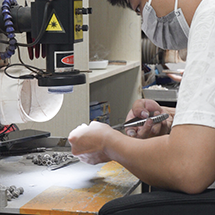
During a video tour, ask the sales representative to show active production areas rather than only the showroom. Look for workstations, equipment, production records, raw materials, unfinished products, and inspection areas.
If an important process such as plating is outsourced, ask how the supplier controls specifications, batch consistency, and rejected products.
You can also review the YinYuan Jewelry Factory to see how design development, craftsmanship, casting, stone setting, plating, and quality inspection are presented within a manufacturing operation.
3. OEM and ODM Development Capability
OEM and ODM describe different levels of supplier involvement.
With OEM production, the buyer generally provides an original design, sketch, technical drawing, or sample. The manufacturer develops it into a production-ready product.
With ODM, the supplier may offer existing designs or create new directions based on a brand brief. The buyer can then modify materials, stones, colors, sizes, logos, or packaging.
For original custom jewelry, ask whether the supplier can provide:
- Technical design review
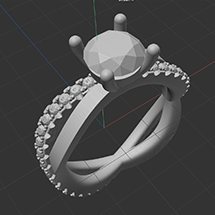
- CAD or 3D modeling
- Product engineering
- Weight estimates
- Stone layouts
- Sample development
- Revision support
- Production specification sheets
The factory should identify potential problems before production. For example, a ring may need a thicker shank, a pendant may need a stronger bail, or a large stone may require a different setting.
A useful manufacturer does not simply say yes to every design. It explains which details need adjustment and why.
4. MOQ and Sampling Requirements
MOQ may apply per design, size, color, plating finish, or material. A supplier advertising a low MOQ may still require a larger total quantity when several variants are combined.
Ask for a clear breakdown:
- MOQ per design
- MOQ per size
- MOQ per plating color
- MOQ per gemstone option
- Sample quantity
- Sample cost
- Mold or tooling cost
- Number of revisions included
- Conditions for refunding or crediting development fees
Sampling is essential for original jewelry. The sample establishes the expected dimensions, weight, comfort, finish, stone setting, clasp function, logo, and plating color.
Do not move to mass production until the sample and written specifications agree. If you approve a sample but later change the material, dimensions, or plating, request an updated confirmation.
For new brands, a smaller initial order may reduce inventory risk. However, extremely low quantities may result in higher unit costs because CAD, molds, setup, plating, and inspection costs are distributed across fewer pieces.
5. Material, Gemstone, and Plating Specifications
General descriptions such as “high quality silver” or “premium gold plating” are not precise enough for production.
Your specification should state:
- Metal type and purity
- Product dimensions
- Target weight or weight tolerance
- Gemstone type and size
- Stone color or grade
- Setting method
- Surface finish
- Plating color
- Gold karat
- Plating thickness
- Protective coating
- Logo position
- Packaging requirements
For sterling silver, confirm whether the product uses 925 silver and which marking is required. For brass or stainless steel, confirm the material grade when it affects performance or market claims.
Gemstone descriptions also need detail. “Blue stone” could refer to several natural, synthetic, or imitation materials. The quotation and sample approval should identify exactly what the factory will use.
Avoid making claims such as waterproof, hypoallergenic, nickel-free, or tarnish-free unless the selected material, process, and testing support them.
6. Quality Control and Product Testing
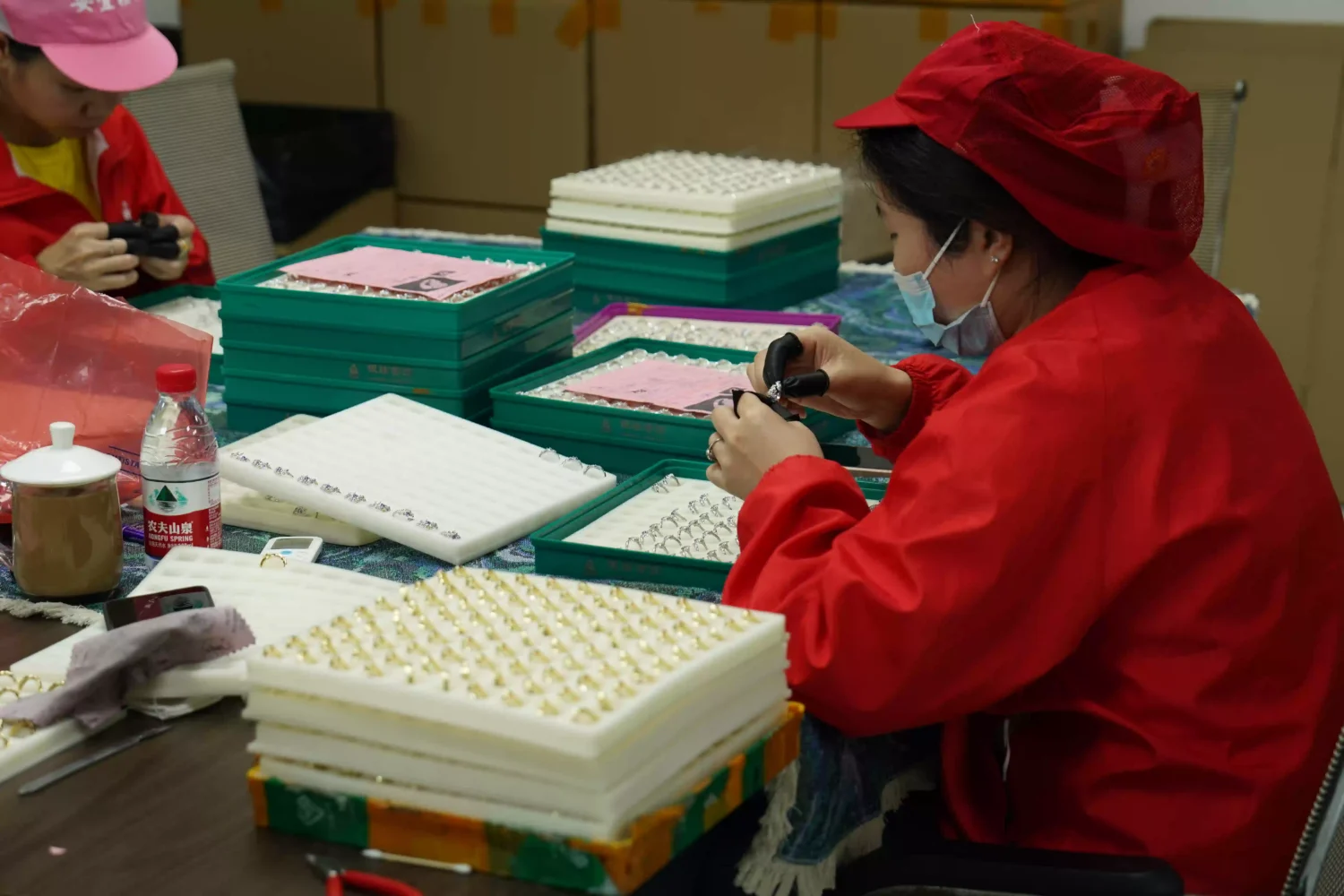
The approved sample demonstrates what the supplier can make once. Quality control determines whether it can reproduce the same standard across a bulk order.
Ask the factory which inspections occur during:
- Incoming material control
- Casting
- Stone setting
- Polishing
- Plating
- Assembly
- Final inspection
- Packaging
QC criteria may include:
- Dimensions and weight
- Metal surface defects
- Soldering quality
- Stone alignment and tightness
- Clasp and hinge function
- Pair matching for earrings
- Plating color and thickness
- Logo position
- Scratches and polishing marks
- Packaging accuracy
Testing requirements depend on the material, target market, and product claim. Possible checks include metal composition, plating thickness, salt-spray testing, abrasion testing, stone-security inspection, or market-specific chemical testing.
Agree on tolerances and acceptance criteria before bulk production. “Good quality” is subjective; a signed sample and written QC standard are much easier to enforce.
7. NDA and Design Protection
Independent designers and jewelry brands may share sketches, CAD files, prototypes, pricing plans, and unreleased collection information.
Before sending valuable design files, ask:
- Can the supplier sign an NDA?
- Who can access the files?
- Who owns the CAD and mold?
- Can the factory display the product online?
- Can it sell the same design to another customer?
- How long will the files remain stored?
- What happens to molds after production?
An NDA cannot eliminate every business risk, but it creates clear expectations. Keep dated records of submitted designs, approvals, and revisions.
If exclusivity matters, define it specifically. A general confidentiality agreement may not automatically give the brand exclusive ownership of every component, mechanism, or common jewelry feature.
8. Communication, Lead Time, and Export Support
Good manufacturing depends on accurate communication.
Evaluate how clearly the supplier answers technical questions. A fast reply is helpful, but a detailed and correct reply is more valuable than an immediate yes.
Confirm:
- Main project contact
- Communication language
- Quotation validity
- Sampling lead time
- Production lead time
- Material sourcing time
- Holiday schedules
- Packaging timeline
- Shipping method
- Incoterms
- Payment schedule
- After-sales process
Ask when the production timeline begins. It may start after deposit payment, CAD approval, sample approval, or material confirmation.
Also ask how the supplier handles delays and defects. A reliable manufacturer should explain how it investigates problems, documents corrective actions, and manages replacements or credits when responsibility is confirmed.
Questions to Ask a Chinese Jewelry Supplier Before Ordering
A structured supplier interview makes comparison easier. Ask every shortlisted company the same questions:
- Are you a manufacturer, trading company, or wholesaler?
- Where is your factory located?
- Which processes do you complete in-house?
- Which materials and product categories do you specialize in?
- Can you produce from sketches, CAD files, or physical samples?
- What is the MOQ per design, size, and color?
- What are the sample, mold, and revision costs?
- How long do sampling and bulk production take?
- How do you verify metal and gemstone specifications?
- Which plating thicknesses and protective coatings are available?
- What quality checks and tests do you perform?
- Can you sign an NDA?
- Who owns the CAD files and molds?
- How do you handle defective products?
- Which payment and shipping terms do you offer?
Compare the quality of the answers, not only the prices. A supplier that provides clear specifications and identifies production risks may be more dependable than one offering the lowest quote with few details.
Why Consider YinYuan Jewelry Manufacturer?
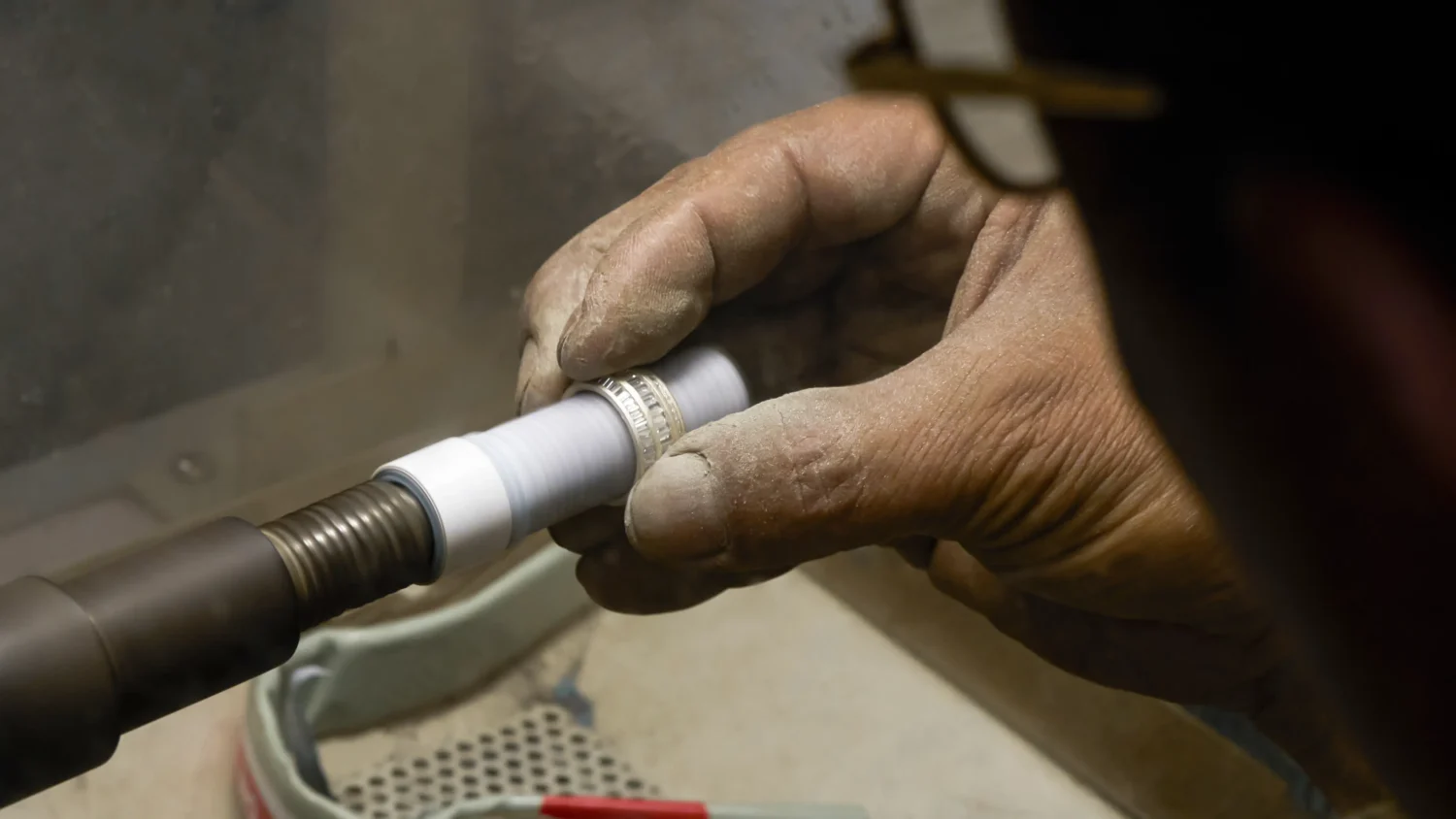
YinYuan Jewelry Manufacturer works with jewelry brands, wholesalers, retailers, and designers on OEM and ODM projects since 2009.
Its publicly presented material capabilities include K gold, 925 sterling silver, brass, moissanite, lab-grown diamonds, and gemstone jewelry. This gives buyers the option to develop several product directions with one manufacturing partner rather than coordinating separate suppliers for every collection.
The custom process can cover:
- Design submission
- CAD development
- Sample production
- Design and sample confirmation
- Mass production
- Quality inspection and delivery
This structure gives the buyer approval points before bulk production begins. Designers can review proportions and construction during CAD development, then inspect materials, finish, comfort, stone setting, and functionality through the sample.
YinYuan also presents in-house plating capabilities with plating thickness control and testing options. This is useful for brands concerned about color consistency, tarnish, fading, and performance across repeat orders.
For new brands, flexible development and MOQ planning can help reduce initial inventory pressure. For established brands and wholesalers, production control, repeat specifications, quality inspection, and communication become more important as order volumes increase.
Design confidentiality is another consideration. NDA support allows brands to establish expectations before sharing original sketches, CAD files, and unreleased collection information.
The best way to evaluate any manufacturer, including YinYuan, is to send a clear project brief, review relevant samples, confirm specifications in writing, and inspect production capabilities before committing to a large order.
What to Include in Your Jewelry RFQ
A detailed request for quotation helps manufacturers provide more accurate prices and timelines.
Include:
- Product sketch, CAD, or reference image
- Jewelry category
- Measurements
- Target metal
- Target weight, if known
- Gemstone type, shape, size, and quantity
- Setting method
- Plating color and thickness
- Surface finish
- Logo or engraving
- Packaging
- Quantity per design
- Size and color breakdown
- Target market
- Required testing
- Target price range
- Expected launch date
Also explain whether you need OEM, ODM, private label, ready-made wholesale products, or a combination.
A quotation based on complete specifications is more useful than a rough price based only on an image.
Frequently Asked Questions About Jewelry Manufacturers in China
How do I find reliable jewelry manufacturers in China?
Use specific Google searches, sourcing platforms, trade shows, wholesale markets, and industry referrals to build an initial supplier list. Then verify factory identity, product specialization, internal production processes, samples, quality-control procedures, and business documents.
Do not select a manufacturer based only on website images or price. Begin with a sample and written specification before placing a bulk order.
How can I verify whether a Chinese jewelry supplier is a real factory?
Request the company name, business address, factory address, recent production photos, and a live video tour. Ask the supplier to explain its equipment, workflow, QC checkpoints, and outsourced processes.
For larger orders, consider an in-person visit or independent factory audit. The goal is not only to confirm that a factory exists, but also to verify that it can produce your specific jewelry.
What is the typical MOQ for jewelry manufacturers in China?
There is no universal MOQ. It depends on material, design complexity, mold requirements, plating color, stone sourcing, and whether the product is custom or ready-made.
A supplier may calculate MOQ per design, size, or color. Ask for the complete quantity breakdown before comparing offers. Low MOQ may reduce inventory risk but can increase unit costs.
Should I choose a manufacturer, wholesaler, or trading company?
Choose a direct manufacturer when you need original development, detailed specifications, and repeat production. Choose a wholesaler when you want existing designs with faster ordering and limited customization.
A trading company can help coordinate several factories or product categories. The right model depends on your design ownership, order quantity, launch speed, and need for production visibility.
Can jewelry manufacturers in China sign an NDA?
Many custom manufacturers are willing to sign an NDA, especially for original OEM designs. However, the agreement should clearly cover confidential information, permitted use, CAD and mold ownership, product photography, exclusivity, and the duration of confidentiality.
Have appropriate legal counsel review important agreements for your business and target market.
How long does custom jewelry production take in China?
The total timeline may include requirement review, CAD development, sample production, revisions, material sourcing, mass production, inspection, packaging, and shipping.
Simple products may move faster than technically complex or stone-intensive designs. Ask the manufacturer to separate sample lead time from bulk production lead time and clarify which approval starts each stage.
What should I send when requesting a jewelry quote?
Send a sketch or reference image together with dimensions, material, gemstone details, finish, plating, quantity, logo, packaging, target market, and launch deadline.
If some details are unknown, explain your desired retail price and customer positioning. An experienced manufacturer may then recommend practical material and production options.
Start Your Jewelry Project With a Verified Manufacturing Partner
The best jewelry manufacturers in China are not simply the companies offering the lowest price. The right partner should understand your product, explain its production process, provide clear samples and specifications, protect your designs, and maintain consistent quality during bulk manufacturing.
Build a shortlist, ask every supplier the same questions, verify the factory, and compare approved samples before making a larger commitment.
Looking for a reliable jewelry manufacturer in China? Share your design, target material, quantity, finish, and launch schedule with YinYuan Jewelry. Our team can review your requirements and help you plan the next steps for CAD development, sampling, and production.
